Maria Hosein, 36, lives in Germany since she was just 6. She remembers the first days after arriving in Germany. “I felt uncertain and lost. I was attached to my parents and siblings. We were in a shared accommodation for refugees, which was quite isolated from other houses. School was a good escape and a chance to make friends. During that time my parents faced many uncertainties and challenges.”
Additionally, she mentions other problems, “An uncertain future, lack of German language skills, unemployment, authorization to work, isolation, lack of communication with loved ones in the home country, financial situation, racism, and so on, all made the situation difficult during our first years in Germany.”
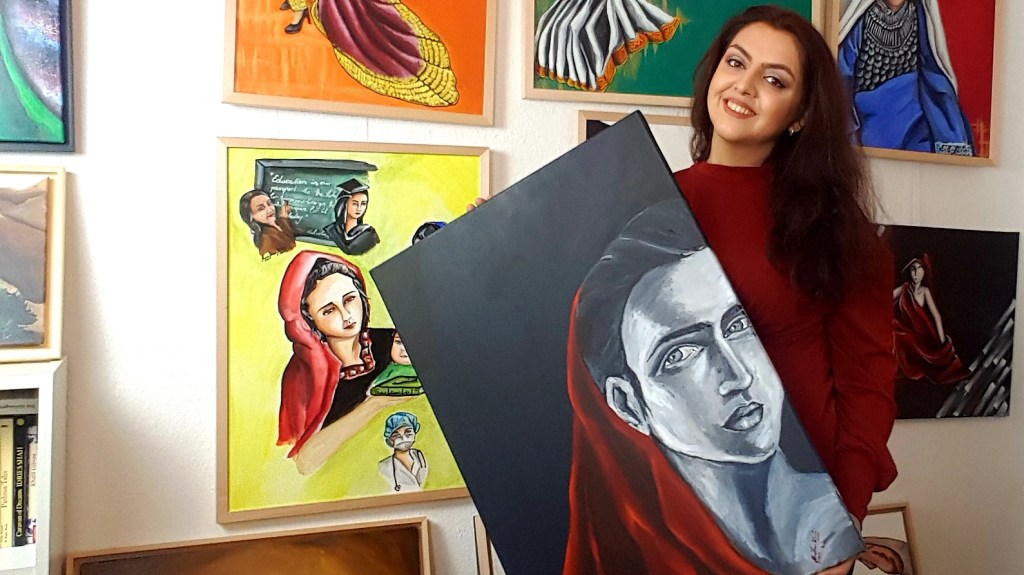
Maria is now pursuing her PhD in Arts. She is a lecturer at the University of Hildesheim and a teacher at a secondary school. Besides her work, her incredible talent in the arts has led her to participate art exhibitions in Germany and other countries. Maria is engaged in advocating for Afghanistan through the arts.
Maria has achieved many of her goals in life, but, “I still have many dreams and plans to follow. I am chasing my dreams,” she says with a smile.
She appreciates the state’s support for education, “I can access the same educational institutions as my German peers, so I was also able to build the life I have today. In general, education and universities are affordable. In Germany, many things are according to a plan, and we need to know and follow rules and procedures.”
Maria does not like the slow process of digital transformation in the country. “There is a lot of excessive bureaucracy. Digitalization is not on the same level as in other countries. There are insufficient investments in essential sectors, such as the educational system. You face more racism if you have an accent or a non-German appearance, names and more. I am privileged with my name and education, but racism is a problem.”
Maria finds herself part of the German society, “I have spent most of my life here. I work for this country. I have German friends and colleagues. I grew up in a small village where I had German friends until I started studying at the university. That journey has expanded my network. I see myself as an Afghan-German. Both cultures are part of my identity. They both belong to me.”
She grew up with Afghan cultural values. “My parents told us stories from Afghanistan. They taught us cultural and traditional norms in Afghanistan. They spoke Pashto, one of the national languages, at home. In my family, respecting elders is important. Hospitality is part of our values. I have been interested in my roots, the culture, and the practices. I love Afghan music, poetry, dresses, food, and phrases. Everything from Afghanistan is in my heart and my life.”
She suggests that other Afghans focus on their education and engage in society. “Follow the rules and regulations of German society. Be engaged and active in social affairs. Always consider time management and be punctual. You are in a new cultural environment. Be passionate and do not expect the same level of hospitality as it is in Afghanistan.”
Losing her youngest brother filled Maria with sorrow. Now she has one elder brother and one younger sister.
When she finds herself in a difficult situation, “I try to be proactive and take responsibility. I try to see a solution and work towards it. When you lose your way, change the situation, if possible. Both have a price of their own: doing something and doing nothing. Think about what you want and choose one or the other. Sometimes things happen that we cannot stop. Being upset at something or someone will cost all your energy. I learned that life is not always fair. The only way to continue is to accept this fact. Sometimes we will get the answers later, and it will make sense, and sometimes it will not. Fighting and investing energy in things we cannot change will weaken us.”
“I wish for peace all over the world. I often wonder how my family, my late father, mother and others would have been if this war had not existed. In my dreams all that pain would end. I wish for peace because war destroys families, homes, people and generations.”
 Hidden Hero