Mariann Yar’s parents met during their studies abroad and married in Afghanistan. In 1996, when the Taliban took control of Afghanistan for the first time, the couple decided to remain in Europe. Mariann was born in Budapest, where her parents first met. Her mother is from Herat and she is Shia, while her father is from Paktia and he is Sunni. Mariann is a professionally trained actress based in Berlin.
When Mariann thought about her future, becoming an artist was not an option. “For a long time, my biggest wish was to become a surgeon. I wanted to fix people’s hearts or brains. I longed for a role in society that would be important and difficult to achieve.” Later, she met an Afghan girl who took Mariann to see a Poetry Slam show, and from there, her interest in an artistic life grew. “She was hoping to change my mind about becoming a doctor. Soon I showed more interest in writing and performing on stage than in studying medicine.” Mariann started taking acting classes and read the book “How to Pass the Entrance Examination for State Theater Schools.” By that time, she was used to earning money for exam preparation classes to make her way into the institution, and she did three jobs on time.
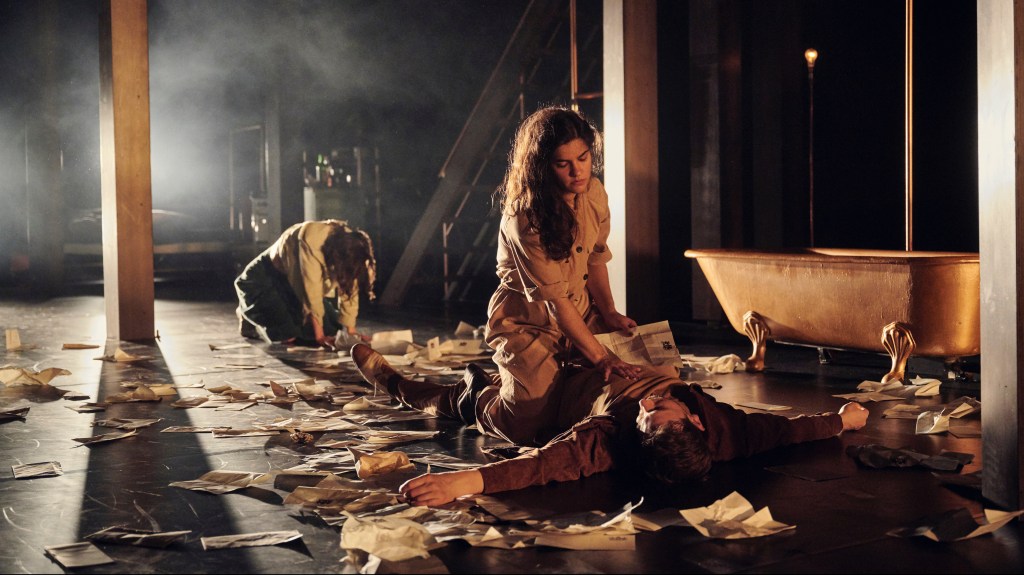
For four years Mariann studied acting at the University of Arts in Berlin. She primarily works in theater but also occasionally appears in movies and TV shows. Last year, she successfully produced her theater piece “LANDSFRAU,” which explores the perspective of the Afghan diaspora in Germany. The show was created with the support of theater makers from the Doris Crea Kollektiv. It will be performed again in November of this year in Berlin. “It’s a typical phenomenon in the diaspora: Your parents left their families and homes and sacrificed everything to give you the best possible education, so they want you to follow in their footsteps. Even though I had been expressing myself artistically my whole life through singing, writing or drawing, I had no one to encourage me to become a professional in artistic endeavors.”
As a freelance actress, Mariann can feel restless: “sometimes a life in the arts feels like the life of a nomad. I wonder if I chose an unsettled lifestyle that echoes my history as a migrant because it feels familiar.” With every new project she has to work in a new city or theater that she has never seen before, or work with a completely new team. “We have to understand each other’s artistic language, values and visions to be able to collaborate. It’s challenging to open yourself and adapt to these new situations every time. Sometimes it’s a very lonely job even though there are other actors with you in rehearsals or on stage. On the other hand it’s also a very social job and I became part of a huge network of friends and colleagues during my studies and years working as an actress.”
She encourages people around the world to speak up for Afghanistan. “It’s important to keep in touch with other Afghans, speak our languages, celebrate our culture and traditions. Learning German also opens your eyes and minds to another rich and beautiful culture. But as the situation in Afghanistan doesn’t get any better, with regards to infrastructure and education, for instance, it is a responsibility of the people in the diaspora or in exile to keep archiving their stories, save knowledge, write our own narratives and raise our voices or amplify the voices of those who don’t have the same possibilities.”
Mariann recommends making donations to organizations and participating in initiatives relating to Afghanistan like @visionsforchildren, to read books and articles by journalists and writers like @emran.feroz and @naanonamak and build alliances not only in the arts but also in solidarity with fellow Afghans living in Germany. She also thank the @afgactivistcollective for their active advocacy about Afghanistan situation.
“There is no way you can turn your back on your roots – you will always be someone caught between two cultures. This may sometimes feel like you don’t belong anywhere but I would like to reframe that. It’s an advantage – you belong to both cultures and this is a position of power because it allows you to connect to people.”
 Hidden Hero