
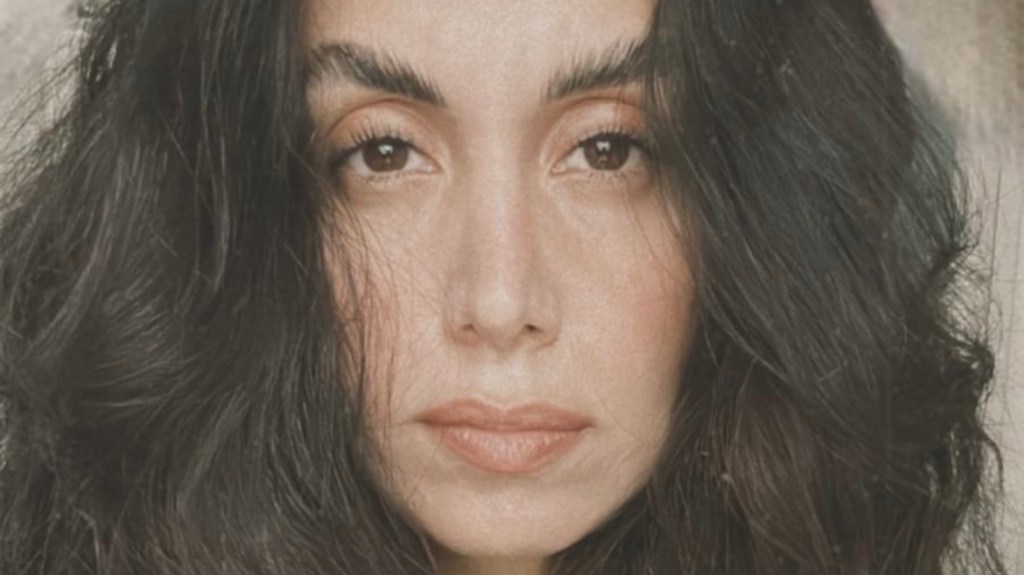
On January 12th, Taiz Nawab turned forty. She was born and raised in an artistic family in Hamburg. Her mother has a beautiful voice and always aspired to become an actress, but she never had the opportunity to do so. Her father is a calligrapher specializing in Persian and Arabic scripts. Both parents studied literature at Kabul University. Taiz has two brothers who are musicians and work in the field of pedagogy. They are trained in playing the tabla, a percussion instrument primarily from the North Indian musical tradition, which is also used in Afghan music.
The family fled Afghanistan in 1978, just before the full Russian invasion. “It took them about forty days to leave after the local communist parties gradually took over. My parents have shared stories of their migration, recounting how many people who weren’t actively supporting the incoming regime during Muhammad Daoud Khan’s rule were automatically declared suspects and subsequently removed from their positions; many were tortured or killed. My family didn’t know what to expect, especially as they had already seen people they knew go missing or be killed. So, my father quickly decided to leave the country for Germany, where his older brother lived.” Thanks to Taiz’s uncle supported them for the immigration to Germany. Despite facing many hardships and challenges, the family persevered. “It took them more than ten years to obtain German citizenship. I was born later, and when I still see the inhumane struggles that so many refugees endure, it feels horrible, insane, and degrading,” she says.
Taiz has always had a passion for design, style, and music. She worked as an interior designer and a personal stylist during and after her school studies. “Although I was an amateur, people trusted me to select their clothes, design their homes, and curate music because they knew I approached these tasks with love and passion. I also had a good sense of people’s tastes,” she explains. For her, music and style are inherently connected.
Her parents encouraged Taiz to pursue something solid but none of the obvious majors most Afghans choose. However, she didn’t feel aligned with those choices, and she didn’t even consider pursuing an education in the realm of the arts. “The idea of studying something in the arts didn’t even cross my mind at that time. Careers in music, fashion, or anything I was deeply interested in were completely off the table because of the mindset of those around me. We didn’t grow up believing that a career in the arts could be successful or profitable. This was particularly the case for Afghan women, even within the diaspora. Looking back, I realize how limiting that mindset was, but at the time, the supportive structures available today didn’t exist, and I wasn’t secure enough, as a person and as a woman, to challenge them. Also thanks to enough brave Afghan artists who paved the way for us.”
After September 11th, Afghans in the diaspora were faced with even more racism, according to Taiz: “It escalated to a whole different level and has gotten more insane ever since. They connected all of us with terrorism and the Taliban,” she says, and continues: “I remember I once met a former classmate of mine – an Armenian guy – after I finished school and he asked me: “What do you want to pursue now?” and I said that I didn’t know, maybe I wanted to go into music and he looked at me very pitifully and said: ‘Even though you are an Afghan woman?’ I can’t describe what I felt when I heard this, and I’ve heard many other things that are way worse.” Taiz decided to study her minors in political sciences/ Cultural Anthropology and major in Islamic Sciences.
Her master’s thesis was about Islam and Hip Hop with a focus on its origins in the US to the present in the context of resistance. “My research on this topic helped me understand resistance to oppression beyond my actual experiences as an Afghan female of the second generation, born and raised in Hamburg. It gave me the tools to articulate and understand many structures and mechanisms behind resistance and oppression and gave me the spark to find my way in music again which is ironic, but that’s how it is.”
Her educational journey was not without its challenges. “When I started, I didn’t realize how complex and difficult these studies would be. Although I wanted to quit many times, I felt too far along to back out. The seminars and teaching lacked diversity, and while the courses critiqued colonial and Eurocentric roots in their field of studies, this critique was often half-hearted. I never quite fit into the group dynamics, and academic circles often felt exclusive and limiting.” However, the experience equipped her with broader language skills, allowing her to read literature in other languages such as Arabic and Farsi.
Today, Taiz is a self-employed artist who works as a DJ. “It took me time to be ready to express myself on a whole different level and be brave enough to enter a career that many Afghan females in the Global North do not venture into. Generally this goes for any type of entertainment I would say not only DJing.” Growing up in an artistic family helped Taiz discover her path. “Music was, and still is, a huge part of our family history, and I believe that, no matter the circumstances, it has always connected us in many ways. It’s the one thing we could all passionately discuss and practice together.”
Taiz passion for music began in childhood. “As a kid, I loved making mixtapes using cassettes and radio music or creating VHS compilations.” Whenever she heard DJs, she thought, “I want to do that,” but she wasn’t sure how to start and felt a bit scared. After saving up some money, she decided it was time to stop dreaming about it and start doing it. The urge to dive in was overwhelming. So, she bought a controller and a laptop, and a close friend supported her every step of the way, providing unfailing encouragement and motivation. “I took a few lessons to learn the basics—beatmatching, scratching, and cutting—and since then, it’s been a journey of learning through experience.” Music and DJing saved her soul. “It has become a form of healing and resistance for me,” she says.
Taiz realized that music was often confined to specific spaces. For example, Afghan music was typically only played at Afghan events like weddings or concerts, never blending with the other music they loved at home. The musicians Ustad Sarahang, Ustad Amir Khan, and Lata Mangeshkar were just as important to them as Michael Jackson, Prince, Marvin Gaye, Sade, Dr. Dre, Snoop Dogg, or Tupac.
However, in public spaces such as parties, clubs, or festivals, she rarely heard SWANA (Southwest Asian and North African) music, let alone Afghan music. “Occasionally, there were ’Bollywood‘ parties or Turkish events, but Afghan music was almost entirely absent from clubs and festivals unless it was part of a rare, so-called ’eclectic’ mix often aimed at a white audience, which wasn’t really suitable for dancing.”
Determined to bring change to the musical scene, Taiz jumped in the deep end at her first gig, wearing her chapan. “Though I was initially scared and felt I wasn’t very good, the energy and connection with the audience were so healing that I realized that Afghans, especially Afghan females, needed this representation.” She continued to pursue her passion and later discovered other Afghan female DJs, which brought her immense joy. It took her one and a half years to become a professional DJ. “The journey has been very intense, but so far, I’ve only scratched the surface,” she says.
In October 2023, Taiz had the opportunity to curate a panel titled “Afghanistan’s Hidden Music Treasures” and organize a music event called “Deejaystān.” During this event, she collaborated with two other Afghan DJs, one of whom was also female. “It marked one of the first SWANA+ events in Hamburg where Afghan music, along with music from other “stān” countries, was showcased. This diverse selection was combined with various genres such as Afrobeat, Hip Hop, Bailefunk, Desi music, and more, spanning all eras.” Deejaystān was an incredible experience for Taiz. A large number of Afghan individuals attended, along with many others from diverse backgrounds, and together they celebrated the richness of music. The male DJ from San Francisco, omjvinyls, who is also a private music collector and has been like a brother to Taiz, decided to establish a record label named Anaristan Saaz. “This label aims to showcase the lost musical treasures of Afghanistan and beyond.”
In her career as a DJ, Taiz is challenging her audiences with her visibility. “Some Afghans, including other Afghan female DJs chose different paths in how they wanna approach their identity. I think all of us may experience shame or any other negative or complex feelings about our identities but we deal with it differently. Growing up, people told me to be ashamed of being Afghan—I personally chose to put being Afghan in my bio, my work or use the Afghan flag in some of my short DJ-Clips”
According to Taiz, visibility as an Afghan person, Afghan woman, and Afghan DJ should be normal. “If I had seen another Afghan female DJ proudly embracing her heritage, I might have thought, “If she can do it, why can’t I?” Visibility is important to me, not just because it’s who I am, but because it’s part of my healing process and an act of resistance. We belong in arts and entertainment, too. But we have to fight for our space on many levels, both within our communities and beyond. It’s a long process, but it’s worth it.”
As a female Afghan DJ, Taiz encounters numerous obstacles, “not only from men but also from within our broader community. The issues of whitewashing and white feminism, along with a lack of genuine solidarity, complicate matters further. Growing up, my parents warned me but so did any other Afghan family, to hide our Afghan identity, for example in front of other Afghans who they didn’t know when they went outside hearing them speak Farsi—a tendency that persists in many minds.”
It is disheartening for Taiz to witness other communities come together while Afghans remain divided. “The SWANA music scene, though evolving, is largely dominated by Iranians, Arabs, and Turks, with a selective solidarity and privilege that often ignores the alienation and racism affecting Afghans. This, combined with false inclusivity and competition within the so-called feminist circles, makes it difficult to break through. Afghan music is often overlooked, as people tend to prefer what they already know. However, integrating Afghan music into the global scene is possible if we support each other and claim our space. It’s up to us to challenge these power dynamics and show up for one another.”
Taiz finds herself navigating the complexities of German communities. “As I grew older and gained more experience and education, I began to see things I previously overlooked. Why have I never felt beautiful in this society? Why did I never speak my mother tongue outside of my home, and even struggled to do so within my home? Why am I frightened by the police, and why do I still feel that way? Why do I continue to feel intimidated by German bureaucracy and the authorities? I could answer all of these questions, and that would shed light on how I perceive my place within German communities. There are so many layers of intersectionality. Where should I start and end the conversation?”
As a second-generation Afghan who has never been to Afghanistan, she explains her challenges by saying, “I face difficulties in my own communities as well. I grew up not speaking Farsi outside the home because of the German people, and when I was with my own people, I avoided speaking it because they made fun of my so-called “accent” and called me ‘Almanigak.’ Of course, you feel like you don’t really fit anywhere, thankfully today I don’t care about comments like this anymore. I proudly speak my language. Nevertheless, my family always encouraged me to speak Farsi even my father taught me how to read and write at a young age.” She is proud of being who she is and appreciates the values and culture she received from her home. “I preserve them in my own way, and hopefully will pass them on to whomever, my own kids or other people.”
With regard to the integration of refugees, she says: “Of course there is no equal treatment of refugees. It would take too long to elaborate on that. Islamophobia, Racism and more. Besides medical needs, first and foremost it is very necessary to provide structures to help process the trauma, preferably from within the own communities because of language and cultural codes. It’s not enough to learn (in this case) the German language and work for a passport (you might never get one) until you’re exhausted—that’s not integration. Parents need help with the overwhelming bureaucracy they are faced with in a language they initially don’t know. Particularly their kids have to take on that overwhelming work because they learn language via school and generally must faster. The roles of parents and kids swap in that case amongst others and that causes further issues. And if someone doesn’t have a work permit, how are they supposed to support themselves? Many have to start over because their diplomas aren’t recognized. If society didn’t alienate and discriminate against people who’ve been displaced—many due to wars they’ve caused—maybe they wouldn’t feel so discouraged about being part of this society or any diaspora/exile. If they weren’t so arrogant and self-centred they would realize that they are not as ’advanced‘ as they think and that all of us in general have much more to learn from people who have been displaced. The technological progress in the Global North is rooted in exploitation and colonialism, after all.”
Turning forty feels like a new beginning for Taiz.
I can honestly say that I am living my best life so far. I am moving closer to my authentic self, which also means that I am unlearning certain behaviours and letting go of expectations and the need to be “perfect and presentable” I am grateful to be doing what I love. I have big dreams, both personally and professionally mostly due to my mother, aunties and the strong Afghan women in my life, who always supported and encouraged me during my life and career journey. I am in a privileged position to do so. I want to continue my work with depth and purpose, and hopefully, that can resonate. Collective Healing and Resistance are at the core of that.

Hidden Hero T-Shirt
Get your Hidden Hero T-Shirt today and help support this impactful initiative! Wear your support proudly and contribute to a cause that makes a difference. Sizes: S M L XL XXL Colors: White, Black, Grey, Olive, Russet Material: 100% Cotton, Unisex, Climate Friendly Delivery: Free delivery inside Germany! For order: please write on WhatsApp 015770177824
€35.00
 Hidden Hero