
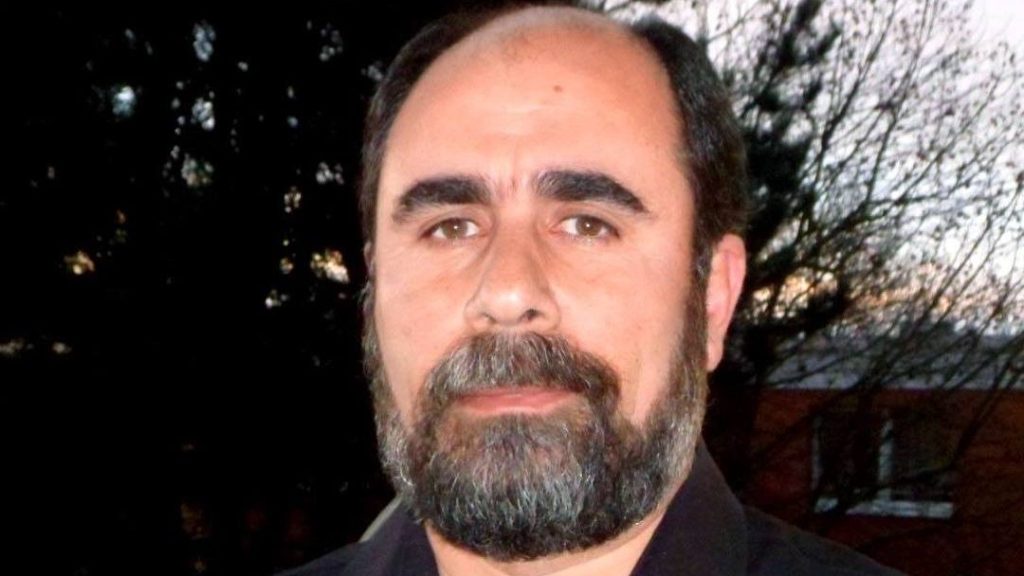
Faruq Mirahmadi was born in 1959 in Farah Province, Afghanistan. After elementary school in his village and high school in Kabul, he completed his higher education in the Soviet Republic of Ukraine and became an engineer specializing in heating, air conditioning, and ventilation. “I studied in Ukraine during the Soviet period, experiencing the period of stagnation, perestroika, and the collapse of the Soviet Union before defending my PhD in a newly-independent Ukraine.” Faruq wrote a story about his experiences in the Soviet Union as a young man titled “Acquaintance with the Soviet Union,” He says, “this piece describes numerous interesting events, funny episodes, and humorous impressions from my time as a student.”
In addition to his profession as an engineer, Faruq is a talented storyteller whose tales have received international recognition. As a child in his village, he often listened to a local storyteller who captivated his audience with his unique style. “During the winter months, my father would frequently invite this storyteller to dinner so that he could share a few fairy tales with us afterward. I was so captivated by his stories that I dreamed of becoming a writer myself one day.”
In 2000, when Faruq moved to Germany with his wife and children, he took several training courses and finally landed to became a freelance writer. He wrote about his village, the mountains, the river, and his memories and experiences. His children encouraged him to write in German. “I hesitated for a long time, unsure of myself, but one day I finally started writing, and that’s how my first novel, *Schabo and Suhrab*, came to be,” Faruq recalls. Since then, he has published two other novels: *A City Boy Made of Butter* and *The Prisoners of Deh-Masang,* and three other stories, including two that have won international awards.
The main characters in all of Faruq’s stories are children and young people. Their lives and experiences are central to the events that unfold. In peaceful times, the boys are rebellious, eager to explore the world and assert their independence. In contrast, the children and teenagers who grow up in wartime live in an environment filled with fear and horror, where their primary focus is survival.
“My stories present a different perspective on Afghan society, its history, culture, customs, and traditions over the last 60 to 70 years than what is commonly shown in the media. I attended school during the turbulent 1960s and 1970s when enthusiastic young people took to the streets peacefully, advocating for change and democracy, and demanding justice and progress. Throughout its young history, our country has made several attempts to establish democracy; unfortunately, each time, external powers have intervened, preventing us from achieving that goal. Now, we find ourselves in the situation we are in.”
According to Faruq, heating and ventilation technology, air conditioning, and gas supply are significantly underdeveloped in Afghanistan. He notes that many multi-story buildings were constructed or renovated without modern heating and ventilation systems, particularly after 2002. Motivated by this issue, he decided to write a book on the state of the art in this field in Germany. Faruq envisioned that the book would serve as a valuable resource for project offices and engineers involved in the design, construction, maintenance, and monitoring of such systems. It would also benefit university students and lecturers. The book was published in 2015 by the Nangarhar Engineering Faculty, with support from the association Afghanik e.V. and German Aid for Afghan Children.
Settling in Germany was not the family’s first choice, but Faruq says, “I have no regrets that my family stayed here and found a second home in Hamburg.” Having lived in Ukraine for many years, they were already aware of the kinds of problems and challenges that awaited them. “Although we were among the lucky few to obtain a residence permit in Hamburg relatively quickly, we still faced significant challenges. Access to the labor market for non-EU citizens was much more difficult back then than it is now. My wife and I studied in the Soviet Union, which was also a major obstacle when searching for a job. However, our children adapted quickly.” Faruq has three grown children who graduated from high school and pursued higher education. His wife also completed several training courses and has been working in public health for years, earning a solid reputation among colleagues and patients.
Faruq and his family live in Hamburg, which he considers one of the most beautiful cities in the world. “My wife and children are well-educated and contribute to the betterment of Germany and its people. We have many wonderful friends and acquaintances in Germany, so we have no reason to complain. However, we are deeply concerned about the current political, economic, and social issues in this country. It pains me to see some mainstream media and politicians exploiting these problems for their short-term interest, creating divisions among citizens and fostering hatred and intolerance.”
A collection of his stories in German is currently ready for publication. “I owe the idea for this collection to my daughter,” he says. “She selected and arranged the stories in a way that reflects the diverse and complex nature of our society during the tumultuous period from the mid-20th century to the present.” The collection includes some previously published stories, including two award-winning works by Faruq, along with several new stories.
The message to the world in all Faruq’s’books and stories is what the Persian poet Saadi Shirazi wrote in the 13th century:
“Human beings are members of a whole
In creation of one essence and soul
If one member is afflicted with pain
Other members uneasy will remain
If you have no sympathy for human pain
The name of human you cannot retain.”
“We are living in extremely dangerous times, and humanity has never been closer to the abyss than it is now. Warmongers are rising everywhere, and people are arming themselves on a massive scale once again. A competition is underway among various parties, each trying to win over voters with radical rhetoric and aggressive slogans. Once again, those in power are finding scapegoats to cover their own failures. Worst of all, people are losing their sensitivity to the harsh realities of war.”
Faruq‘s message to such rulers: “Please refrain from interfering everywhere, destabilizing other countries, or waging wars. This will reduce suffering and the number of refugees in the world.”
Faruq‘s message to their citizens: “Please do not remain indifferent or silent. Don’t believe the politicians who attack other countries, spend billions on wars, and justify their actions by claiming they are doing it for the security of the nation or to bring freedom and democracy to other peoples. Please do not vote for warmongers or preachers of hate.”
 Hidden Hero