
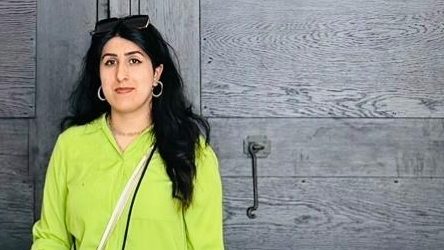
Tamana Maihanwerd, 30, holds a Master’s degree in Business Administration. She used to work at the Administrative Office of the former President of Afghanistan, where she served as Research General Manager and Accountant in the economic sectors. Her life was fulfilling before immigration to Germany: “After 18 years of dedicated study, I finally met my educational goals and started working in the profession I had always dreamed of. I was surrounded by supportive colleagues and close friends and I felt I was living the best chapter of my life.”
Leaving everything behind was deeply painful for Tamana. Due to increasing threats to her security, she had no choice but to leave her job, friends, and childhood memories—essentially her entire world in Afghanistan. “It felt like I was being torn away from everything that had defined me for so long.”
When she arrived in Germany in 2019, she had the impression she was starting from scratch. “Everything—from the language and culture to the people and environment—was new. I remember standing and staring at people, feeling completely lost in that moment.” It was an emotional and challenging journey for Tamara, who felt heartbroken and homesick. “I knew I had to set new goals for myself,” she says.
During the course of her asylum process, she wasn’t allowed to take official German language classes, so she started learning the language on her own. Later, she enrolled in certified German classes (B1, B2, and C1) and completed a 15-month additional training (Weiterbildung) in Human Resource Management. Soon after finishing, she secured a job as an Office Manager and Accountant in a consultancy supporting refugees to get a job. “That was a turning point in my new life. I’m now part of a dynamic, multicultural, and professional team. I feel fulfilled and happy in my work and grateful for the path I’ve built for myself in Germany.”
According to Tamana, many refugees in Germany have strong educational backgrounds and valuable work experience from their home countries, yet they remain jobless due to restrictive policies and lack of accessible opportunities. “I believe integration would be far more effective if, upon arrival, refugees were offered job suggestions or placement tailored to their skill sets. This would allow them to learn the language through daily interaction, earn an income, and contribute by paying taxes.” In contrast, she suggests: “simply attending German courses—where teachers often dominate the conversation and students have limited opportunities to speak—does not support effective language learning, especially for refugees over 40. For this group in particular, being placed in real-life environments where they can engage with others would greatly accelerate both their language acquisition and their integration into society.”
Although she was able to communicate in English from the very first day she arrived in Germany, learning the German language truly helped her integrate and feel more connected within German communities. “Over the past six years living in Berlin, I’ve actively participated in libraries, Sprachcafés, events, workshops, and various programs. Through these experiences, I’ve built a strong network of multinational friends. That’s one of the things I love most about Berlin—its vibrant diversity and multicultural spirit.”
What Tamana enjoys most in Germany is the freedom—the freedom to study, to work, to participate in society, and to make her own decisions. “These are fundamental rights, and they stand in heartbreaking contrast to the situation of women in Afghanistan, where many are silenced and barred from basic freedoms. My heart aches for Afghan women, and I continue to hope for a free and just Afghanistan.”
Thanks to her determination, she pursued her career in a new country. “I was determined not to let circumstances define my future. Setting clear goals and being persistent was key. Learning the language, gaining new qualifications, and staying focused on personal and professional growth helped me to get to where I am today.”
Tamana appeals to all countries around the world:
“Please, do not leave Afghanistan behind. Do not forget Afghan women. Stop recognizing or making deals with the Taliban. Afghanistan needs your support—urgently. Create programs and issue educational visas for Afghan women. End all forms of discrimination against refugees. Keep the doors of refuge open and accept more Afghan refugees. This is a humanitarian call that should not be ignored.”
 Hidden Hero