
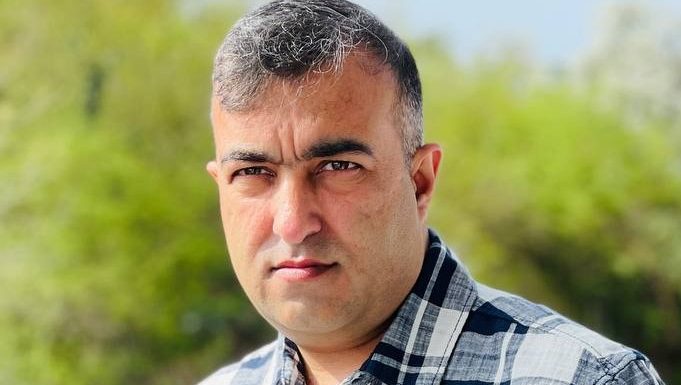
When Imamudin Hamdard, 44, arrived in Germany in 2021, he brought more than just a suitcase with him. He carried the weight of displacement, the silence of exile, and the uncertainty of beginning again. “I faced challenges related to integration, language barriers, and uncertainty about the future. These early experiences were stressful and emotionally overwhelming.” He comes from a large family with five brothers and three sisters.
Rather than being defined by the trauma of forced migration, Imamudin chose to transform his experience into action. “To cope with that stress and regain a sense of purpose, I chose to engage in volunteer work. Volunteering became a powerful way for me not only to overcome my own difficulties but also to help others avoid the hardships I went through.” He began volunteering with Gemeinsam Wohnen in Bonn (GeWiB) and the Talkoot – Gemeinsam auf Augenhöhe-Projekt, using every opportunity to advocate, organize, and empower others.
While many were still finding their footing, Imamudin was already building bridges in his new home. He founded the Afghanistan Studies & Cooperation Center (ASCC). “The idea of establishing the organization was born out of a shared vision among a group of committed individuals, including myself, who had experienced the challenges of displacement and integration firsthand. We realized that it was not enough to focus solely on rebuilding our own lives—we also felt a deep responsibility to support others facing similar difficulties. Our goal was to create a platform that could not only empower ourselves but also serve the wider community, especially Afghan refugees and migrants.” Through this organization, Imamudin and his peers aim to build bridges between people, cultures, and ideas, and to contribute to a more inclusive and compassionate society.
Imamudin is also a freelance researcher and political analyst. He holds a Master‘s Degree in International Relations and speaks six languages. With this role as a research analyst his vision is to contribute to a more informed, just, and peaceful society—particularly in relation to Afghanistan and broader regional dynamics. “I aim to provide objective, evidence-based insights that can support policymakers, institutions, and civil society in making better-informed decisions.”
In Afghanistan, Imamudin contributed to several projects, particularly in the areas of youth empowerment, social justice, and policy development which were funded by the German government. “As part of the Young Leaders Forum, I was responsible for youth empowerment initiatives, where we successfully trained around 350 young Afghans across various provinces. These trainings aimed to enhance leadership skills, civic engagement, and critical thinking among these youth—helping them to become active contributors to their communities.” He led efforts in a Social Justice Project that focused on supporting journalists and labor unions. He also served as the Secretariat of the Afghanistan Policy Group, where he coordinated research and advocacy efforts that resulted in several policy recommendations.
According to Imamudin, the current situation of Afghan refugees in Germany is complex and marked by both opportunities and ongoing challenges. “On the one hand, Germany has provided critical protection and support for many Afghans fleeing conflict, persecution, and instability. This humanitarian commitment is deeply appreciated. On the other hand, many Afghan refugees continue to face difficulties related to legal uncertainty, language acquisition, access to education and employment, and social inclusion.” He mentions that successful integration is not a one-sided process; it requires efforts from both the host society and the refugees themselves. “In my view, several steps such as legal clarity and stability, language and education support, employment, community engagement, and mental health and psychosocial support are essential to support meaningful and sustainable integration.” While integration is a continuous journey, Imamudin found that openness, respect, and a willingness to both share his own culture and learn from others are key to fostering meaningful relationships. “This approach not only helps me find my place but also contributes to bridging cultural gaps and promoting social cohesion.”
Life has been progressing steadily for Imamudin both personally and professionally. On a personal level, he is grateful for the support of his family as they continue life together in a new environment filled with opportunities, “not only for me but for each member of my family, including my wife and children. This environment offers us the chance to grow and adapt positively.” Professionally, he remains actively engaged in research, advocacy, and community work, particularly through the ASCC.
He encourages newly arrived Afghan evacuees to approach this new chapter in their lives with patience and resilience. “Integration is a gradual process that requires time, openness, and effort. Learning the language and engaging with local communities are essential steps that can greatly ease this transition. I ask them to seek out support networks—whether through local organizations, community groups, or official services—that can provide guidance and assistance. These resources can help navigate administrative procedures, access education, and find employment.”
Imamudin says, “my message to the world is rooted in the fundamental belief that every human being is equal and deserves respect and dignity, regardless of their background, nationality, or circumstances. It is essential that we treat one another with fairness and compassion, recognizing our shared humanity.” He adds, “I also urge individuals and institutions to act with integrity and empathy—never to use others for personal or political gain. True progress and peace can only be achieved when we prioritize the well-being and rights of all people, rather than exploiting vulnerabilities for selfish benefit.”
In a time when the world feels fragmented, Imamudin Hamdard’s story is a reminder: real leadership doesn’t shout — it serves. And in the quiet, determined steps of people like him, we find the path forward.
 Hidden Hero