
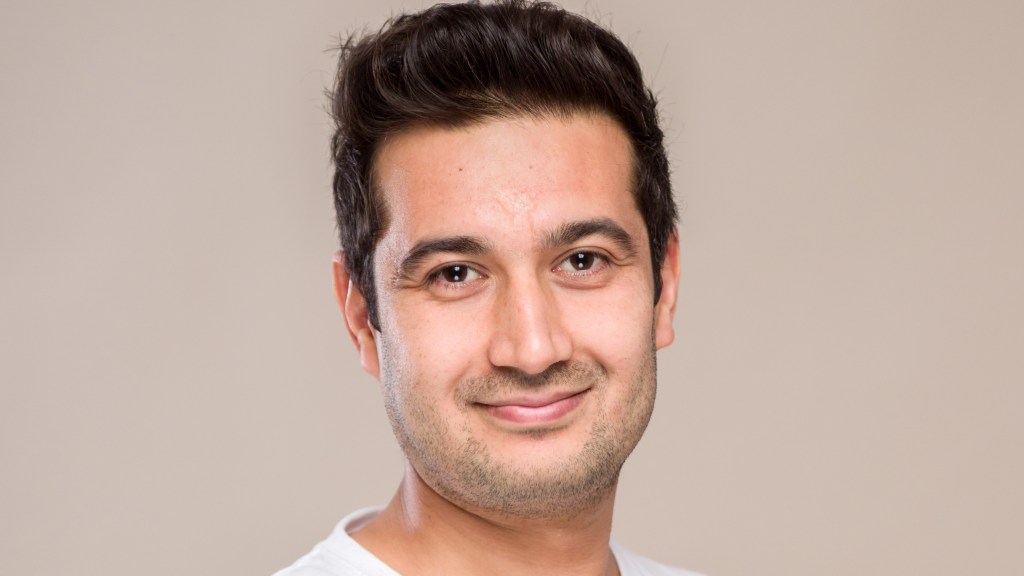
Sayed Murtaza Hashimi worked as a university lecturer at Balkh University in Afghanistan. He obtained his first master’s degree in Politics and Public Administration from India. To further his career, he pursued a second master’s degree through the Erasmus Mundus Joint Master’s Degree Program in International Humanitarian Action, offered by Ruhr-Universität Bochum in Germany and Uppsala University in Sweden. After completing his studies, Murtaza stayed in Germany. “While I was working on my Master’s thesis, the political situation in Afghanistan changed drastically as the Taliban took over the country. This upheaval was incredibly challenging for me. On the one hand, I was deeply concerned about my family who remained in Afghanistan; on the other hand, I faced the profound sense of losing twenty years of effort toward building a better future for the younger generation and fostering democracy, all seemingly undone in an instant. I felt as though everything I had worked for was lost and that I had nothing left. Despite these overwhelming difficulties, I managed to complete my studies and began searching for a job to remain in the country, as I had no other place to go.” In addition to his teaching responsibilities, Murtaza worked with various humanitarian and development organizations and volunteered in activities that supported youth development in Afghanistan before he left his country of origin.
Murtaza eventually found his way in his new home and endeavored to remain in the humanitarian and social field. “I love engaging with people and supporting them in any way I can. Communicating with diverse individuals and offering assistance makes me feel truly alive.” Today, he is the director of a refugee camp in a town in Brandenburg, east of Berlin. “I wanted to work in a refugee camp to contribute to helping those who have left their homeland and everything behind in search of a safer place to live.” His goal is to help refugees find their way, integrate into society more quickly, and feel welcome in their new home. “It is not just a job for me; it is a duty as a human being.” Like many other immigrants, Murtaza experienced challenges learning the language and compiling and submitting extensive paperwork, made more complicated by the COVID-19 pandemic.
After studying in western Germany, Murtaza decided to live and work in another part of the country. “Based on what I’d heard in the western part of the country, I initially thought it would be very challenging to manage a team of Germans from the east and to live in an eastern German town. However, my experience once I moved east turned out to be quite different. The team I work with and the people in the town are very different from what I had heard. Everyone is very friendly and welcoming. I believe that no matter where someone lives or works, if we put in more effort, are friendly, and do good things, the people around us will be happy and friendly in return.”
People from 22 different nations reside in the camp where Murtaza is currently working. They experience many new things in their new home, learning every day, and gradually moving closer to a stable life in Germany. “The people in refugee camps are eager to learn the language quickly and start working for a living. However, there is a shortage of available spots in integration courses, and the paperwork process for obtaining a work permit is lengthy, complicated, and difficult. Many refugees are ready and willing to work, but this prolonged process prevents them from doing so. I believe that, overall, the process for obtaining work permits for refugees should be streamlined and expedited, enabling them to work and integrate into society more quickly.” Seeing the resilience of the refugees, their unwavering hope and their daily efforts to empower themselves inspires Murtaza to continue assisting them.
Murtaza believes that Germany is doing an excellent job in supporting refugees. “Managing everything for new arrivals is challenging, without a doubt, but Germany is making significant efforts to assist people with integration, learning the language, and finding a good place in their new home.” The lengthy bureaucratic processes, extensive paperwork, language barriers, and cultural differences in Germany are difficult for refugees, according to Murtaza. He considers Germany his home now: “Although Afghanistan will forever remain in my heart. Germany has given me so much that I will never forget. I studied here, I work here, and I feel integrated into society. I cherish the diversity, respect for human rights, dignity, fairness, equality, independence, and democracy that I have found here in Germany.”
In Afghanistan, Murtaza founded the Youth Empowered Society (YES), a non-governmental, non-political, independent, and non-profit civil society organization. “The organization was established by several like-minded, bright, and committed Afghan youths who believe in the need for development in Afghanistan. YES has a vision for the development and welfare society for Afghan youth and a mission to empower Afghan youth, children, and women to combat poverty, social injustice, and illiteracy. It was established in March 2017 and was registered with the Ministry of Justice in Afghanistan.” Murtaza continues to support initiatives from this organization and remains connected with young people in Afghanistan.
For his fellow Afghans in Germany, he suggests: “Embrace challenges and never stop striving. Starting anew in a different country is like beginning life from scratch, and while it’s never easy to rebuild, it is profoundly rewarding. They should accept Germany as their new home and wholeheartedly adapt to this new chapter. I would say to the new arrivals that every step you take brings you closer to a brighter future and a place where you truly belong.”
“Believe in yourself, embrace the challenges, and remember that every step, no matter how small, brings you closer to your dreams. Keep your spirit unbroken and your heart full of hope. I don’t consider myself a hero. The real heroes are the people back in Afghanistan, especially the young individuals on my team. They are the ones who truly inspire, empowering their generation and standing steadfastly for justice.”

